

XVIII The Sacraments
Come back to the Father
Confession is where Christ forgives. A simple guide to the sacrament of Reconciliation — how to prepare, what happens, and the words to say — drawn from the Catechism of the Catholic Church.
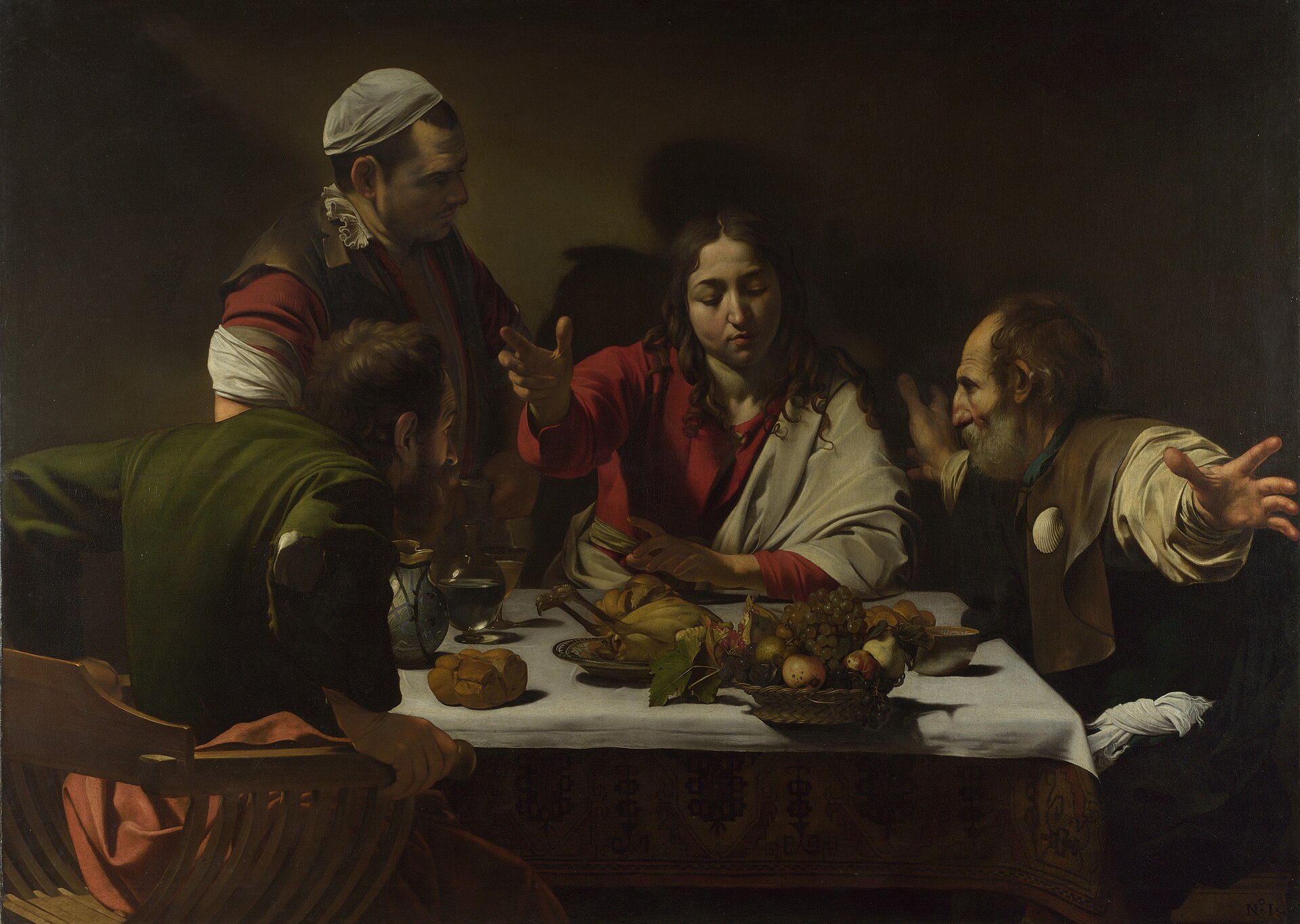
Photo: Caravaggio · Public domain
The sacrament of mercy
“Your sins are forgiven”
On the evening of Easter the risen Lord breathed on his apostles and said: “Receive the Holy Spirit. Whose sins you forgive are forgiven them” (John 20:22-23). In the sacrament of Penance — also called Confession or Reconciliation — Christ himself, through the priest, forgives the sins committed after Baptism and reconciles us with God and with the Church.
Every Catholic who has reached the age of discretion is bound to confess grave sins at least once a year, and the Church warmly recommends frequent confession even of lesser faults (CCC 1457–1458). No sin is too great for God’s mercy.
How to go to Confession
- 1
Prepare
Ask the Holy Spirit for light and look honestly at your life since your last confession, using the examination below. Be sorry for your sins and resolve, with God’s help, not to sin again.
CCC 1450–1454 - 2
Begin
The priest welcomes you. Make the Sign of the Cross. You may say: “Bless me, Father, for I have sinned. It has been … since my last confession.” You can confess face to face or behind the screen, as you prefer.
CCC 1480 - 3
Confess your sins
Tell your sins simply and honestly. All grave sins not yet confessed must be named, with their kind and, as far as you can, how often (Code of Canon Law, can. 988); confessing everyday faults is also strongly recommended. If you are unsure or have forgotten how, say so — the priest will help you.
CCC 1456–1458 - 4
Receive your penance
The priest may offer counsel and gives you a penance — a prayer or an act — to repair the harm done by sin. Ask if you do not understand it.
CCC 1459–1460 - 5
- 6
Absolution
The priest extends his hand and pronounces the words of absolution, ending: “I absolve you from your sins in the name of the Father, and of the Son, and of the Holy Spirit.” Answer: “Amen.”
CCC 1449 - 7
Go in peace
Thank God for his mercy and carry out your penance as soon as you can. What you said is protected by the absolute seal of confession: the priest may never reveal it.
CCC 1467
Before you go
An examination of conscience
Read slowly, in the presence of God. These questions follow the Ten Commandments as the Catechism explains them; open each one to read the Church’s teaching in full. A sin is grave (mortal) when its matter is grave and it is committed with full knowledge and deliberate consent (CCC 1857).
II am the Lord your God: you shall not have strange gods before me.
- Do I give God time every day in prayer? Have I neglected prayer for long periods?
- Have I doubted or denied a truth of the faith on purpose, or been ashamed to live as a Catholic?
- Have I put anything — money, success, pleasure, a person — before God?
- Have I taken part in superstition, fortune-telling, horoscopes, spiritualism or the occult?
- Have I received Holy Communion while conscious of grave sin?
IIYou shall not take the name of the Lord your God in vain.
- Have I used the name of God, of Jesus, of Mary or of the saints carelessly, in anger or in blasphemy?
- Have I sworn a false oath, or broken a promise or vow made to God?
IIIRemember to keep holy the Lord’s Day.
- Have I missed Mass on a Sunday or a holy day of obligation through my own fault?
- Have I come late or been inattentive at Mass without reason?
- Have I made Sunday a day of unnecessary work, or kept others from rest and worship?
IVHonour your father and your mother.
- Have I been disrespectful or unkind to my parents, or neglected them in age or need?
- As a parent, have I cared for my children’s faith, education and example?
- Have I been unjust or harsh with those under my care, or disobeyed lawful authority without reason?
VYou shall not kill.
- Have I harmed anyone in body or soul, by violence, by hatred, or by leading them into sin?
- Have I held on to anger, resentment or a desire for revenge? Have I refused to forgive?
- Have I procured, encouraged or taken part in an abortion or euthanasia?
- Have I endangered my own life or health or that of others — through drink, drugs or reckless driving?
VIYou shall not commit adultery.
- Have I been unfaithful to my spouse in deed or in desire?
- Have I committed impure acts, alone or with another?
- Have I looked at pornography or sought out what feeds lust?
- Have I treated others as objects rather than persons?
VIIYou shall not steal.
- Have I stolen, cheated, or kept what belongs to another? Have I made restitution?
- Have I been dishonest in my work, my business or my taxes, or paid an unjust wage?
- Have I been wasteful, or closed my heart to the poor?
VIIIYou shall not bear false witness against your neighbour.
- Have I lied, or deceived others?
- Have I damaged someone’s good name by detraction (revealing faults without need) or calumny (saying what is false)?
- Have I gossiped, betrayed a confidence, or failed to put right the harm I did by my words?
IXYou shall not covet your neighbour’s wife.
- Have I willingly entertained impure thoughts and desires?
- Have I guarded my eyes, my imagination and what I watch and read?
XYou shall not covet your neighbour’s goods.
- Have I been envious of what others have, or resentful of their success?
- Have I let the desire for money or possessions rule my heart?
+The precepts of the Church
- Have I attended Mass on Sundays and holy days of obligation, and rested from unnecessary work?
- Have I confessed my sins at least once a year?
- Have I received Holy Communion at least during the Easter season?
- Have I kept the days of fasting and abstinence the Church appoints?
- Have I helped to provide for the needs of the Church according to my means?
Act of Contrition
O my God, I am heartily sorry for having offended Thee, and I detest all my sins because of thy just punishments, but most of all because they offend Thee, my God, who art all good and deserving of all my love. I firmly resolve with the help of Thy grace to sin no more and to avoid the near occasion of sin. Amen.
In Latin — Actus contritionis
Deus meus, ex toto corde pænitet me ómnium meórum peccatórum, éaque detéstor, quia peccándo, non solum pœnas a te iuste statútas proméritus sum, sed præsértim quia offéndi te, summum bonum, ac dignum qui super ómnia diligáris. Ídeo fírmiter propóno, adiuvánte grátia tua, de cétero me non peccatúrum peccandíque occasiónes próximas fugitúrum. Amen.
Text from the appendix of the Compendium of the Catechism. Any sincere words of sorrow are enough; your priest may also use another approved form.
Drawn from the Catechism of the Catholic Church (Part Two, Article 4: The Sacrament of Penance and Reconciliation; Part Three, Section Two: The Ten Commandments) and its Compendium (questions 296–312). The examination of conscience is a help for prayer, not a complete list; if in doubt, ask your confessor.