

XIII Pilgrimage
The great pilgrim ways
Sixteen pilgrim ways — some walked for a thousand years, some marked in our own time — to Santiago, Rome and Assisi, Nidaros, Vadstena, Fátima and Mariazell, with the churches and shrines along the way.
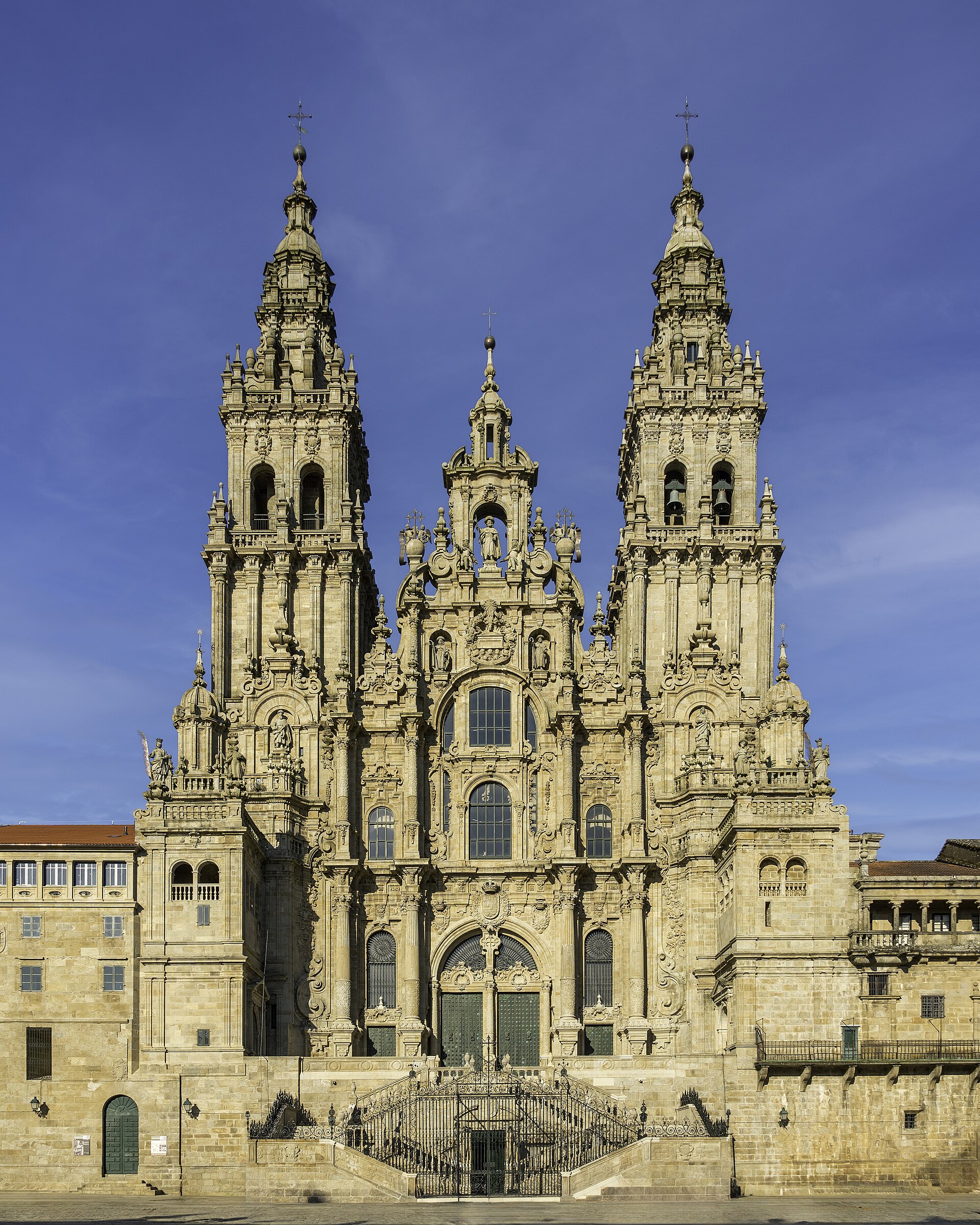
Photo: Fernando · CC BY-SA 4.0
To go on pilgrimage is to pray with your feet: to leave home for a holy place, step by step, and to come back changed. The ways below follow the routes marked on the ground today, from OpenStreetMap — tap one to see it on the map and what you will pass on the way.
Camino Francés
Saint-Jean-Pied-de-Port → Santiago de Compostela
The classic Way of St James: over the Pyrenees at Roncesvalles and across northern Spain by Pamplona, Burgos and León to the tomb of the Apostle. The most walked of the Ways of St James.
Along the wayThe Miracle of O CebreiroTomb of James the ElderCathedral of Santiago de CompostelaBurgos CathedralLeón CathedralPamplona CathedralTomb of Marcellus of TangierBasilica of San IsidoroBasílica de la Virgen de la Encina de PonferradaBasílica de la Virgen del Camino
Photo: Hayden Soloviev · CC BY 4.0
Camino Portugués
Porto → Santiago de Compostela
North through Portugal, by the inland way or along the coast from Porto, crossing the Minho into Galicia at Tui. Gentle and green.
Along the wayThe Holy Miracle of SantarémTomb of Elizabeth of AragonLisbon CathedralEstrela BasilicaBasilica of Our Lady of the Martyrs, Lisboa
Photo: Joseolgon · CC BY-SA 4.0
Camino del Norte
Irún → Santiago de Compostela
Along the Cantabrian coast by San Sebastián, Bilbao, Santander and Gijón — cliffs, beaches and fishing towns — before turning inland through Galicia to Santiago.
Along the wayMetropolitan Cathedral Basilica of the Holy Saviour, OviedoSt. James' CathedralSantander CathedralCatedral de MondoñedoBasilica of BegoñaBasilica of St. John the BaptistBasilica of Saint Mary of the ChorusBasilica of the Assumption of Our Lady of LlanesBasilica of Santa María, PortugaleteShrine Basilica of the Sacred Heart
Photo: Asqueladd · CC BY-SA 4.0
Camino Primitivo
Oviedo → Santiago de Compostela
The first Way of all: King Alfonso II travelled it from Oviedo in the ninth century to see the newly found tomb of St James. Mountainous and quiet, it passes through Lugo and joins the Camino Francés in Galicia.
Along the wayMetropolitan Cathedral Basilica of the Holy Saviour, OviedoLugo CathedralBasilica of St. John the Baptist
Photo: Fernando · CC BY-SA 4.0
Camino Inglés
Ferrol · A Coruña → Santiago de Compostela
The way of pilgrims from the British Isles who came by sea and landed at Ferrol or A Coruña — a short Camino.
Along the wayTomb of James the ElderCathedral of Santiago de Compostela
Photo: Fernando · CC BY-SA 4.0
Vía de la Plata
Seville → Santiago de Compostela
The long southern way from Seville, north through Mérida and Zamora. Hot, wide and solitary — for pilgrims with time.
Along the wayMetropolitan Cathedral Basilica of the Holy Saviour, OviedoBasilica of St. John the BaptistShrine Basilica of the Sacred Heart
Photo: Julián Rejas De Castro · CC BY-SA 2.0
Via Podiensis
Le Puy-en-Velay → Saint-Jean-Pied-de-Port
The great French way, from the Marian cathedral of Le Puy through Conques and Moissac to the Pyrenees — Bishop Godescalc of Le Puy, in 950–951, is the first pilgrim from beyond the Pyrenees known to have gone to Santiago.
Along the wayTomb of Benildus RomançonLe Puy CathedralBasilica Saint-Joseph-de-Bon-Espoir d'Espaly-Saint-Marcel
Photo: Guimsou · CC BY-SA 3.0
Via Francigena
Canterbury → Rome
The road to Rome described by Archbishop Sigeric of Canterbury around 990: across France, over the Great St Bernard Pass and down through Tuscany to the tombs of Peter and Paul.
Along the wayTomb of Augustine of HippoTomb of John Paul IITomb of Paul the ApostleOur Lady of the SnowsThe Miracle of TurinThe Miracle of SienaTomb of PeterTomb of Pius XSt. Peter's BasilicaTomb of Gregory I
Photo: Ludovic Péron · CC BY-SA 3.0
Via di Francesco
La Verna → Rome
In the footsteps of St Francis: from La Verna, where he received the stigmata, through Gubbio and Assisi and the Rieti valley to Rome.
Along the wayTomb of John Paul IIOur Lady of the SnowsTomb of PeterTomb of Francis of AssisiTomb of Pius XSt. Peter's BasilicaTomb of Gregory ITomb of Ignatius of LoyolaTomb of Maria Elisabeth HesselbladTomb of Philip Neri
Photo: Gunnar Bach Pedersen · Public domain
St. Olavsleden
Selånger → Trondheim
From the Baltic coast at Selånger in Sweden across the mountains to Nidaros in Trondheim, where St Olav, who fell at Stiklestad in 1030, was enshrined a year later.
Photo: DXR · CC BY-SA 4.0
Gudbrandsdalsleden
Oslo → Trondheim
Norway’s main pilgrim road from Oslo to St Olav’s shrine at Nidaros in Trondheim.
Photo: Kjetil Kjernsmo · CC BY-SA 3.0
Birgittaleden
Vadstena
Towards Vadstena on Lake Vättern, where St Bridget of Sweden founded her order and where her relics rest in the Blue Church.
Photo: L.G.foto · CC BY-SA 4.0
Caminhos de Fátima
Lisbon → Fátima
The pilgrim ways to the Sanctuary of Fátima, walked by thousands before the great pilgrimages of 13 May and 13 October — here the Tagus way from Lisbon and the way from the east.
Along the wayOur Lady of FátimaThe Holy Miracle of SantarémTomb of Jacinta MartoLisbon CathedralEstrela BasilicaSanctuary of FátimaBasilica of the Holy Trinity, FátimaBasilica of Our Lady of the RosaryBasilica of Our Lady of the Martyrs, Lisboa
Photo: Berthold Werner · CC BY-SA 4.0
Wiener Wallfahrerweg
Vienna → Mariazell
The Viennese pilgrim way through the Vienna Woods and the Alpine foothills to the Basilica of Mariazell, the great Marian shrine of Central Europe since 1157.
Photo: C.Stadler/Bwag · CC BY-SA 3.0 at
Camino Lebaniego
San Vicente de la Barquera → Santo Toribio de Liébana
From the Cantabrian coast into the Picos de Europa to the monastery of Santo Toribio, which by tradition keeps the largest surviving relic of the True Cross. A Holy Year is kept whenever 16 April falls on a Sunday.
Photo: Francisco J. Díez Martín · CC BY-SA 2.5
St Cuthbert’s Way
Melrose → Lindisfarne
A modern way from Melrose — near Old Melrose, where St Cuthbert became a monk in 651 — across the Cheviot Hills to Holy Island, reached across the sands at low tide.
Photo: Chris Combe from York, UK · CC BY 2.0
Routes © OpenStreetMap contributors (ODbL), as waymarked and mapped today; variants and stages may differ from the guidebooks. Always check local conditions, accommodation and the pilgrim credential before you set out.