

XIII Pray
Pray for the dead
November is the month the Church remembers her dead. Light a candle for someone you have lost, pray for them with the Church, and gain the November indulgences for the faithful departed.
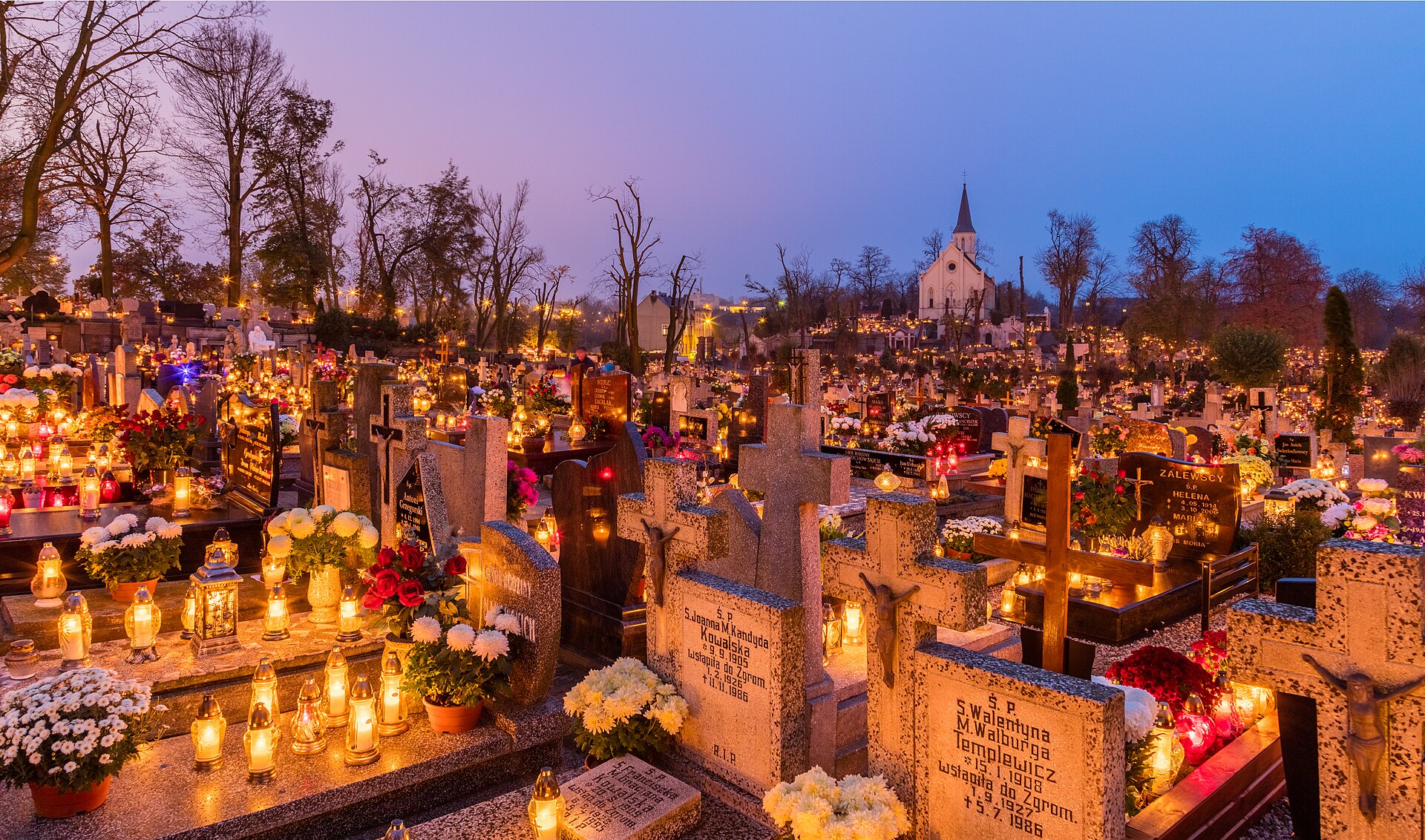
Photo: Diego Delso · CC BY-SA 4.0
A light for the departed
Light a candle
Write the name of someone you are praying for — a parent, a friend, a child — or leave it blank and light it for all the faithful departed, especially those who have no one to pray for them.
candles lit on CathoNav
The name never leaves your device. We only count how many candles have been lit.
Your candles
Eternal rest grant unto them, O Lord, and let perpetual light shine upon them. May they rest in peace. Amen.
Why we pray for the dead
Love is stronger than death
Those who die in God’s grace and friendship, but still imperfectly purified, are assured of their eternal salvation; after death they undergo a purification to reach the holiness needed for the joy of heaven. The Church calls this final purification Purgatory (Catechism 1030–1031).
From the beginning the Church has honoured the memory of the dead and prayed for them — above all by offering the Eucharistic sacrifice — and she also commends almsgiving, indulgences and works of penance on their behalf (Catechism 1032). Our prayer can help them, and can make their intercession for us effective (Catechism 958).
“It is a holy and a wholesome thought to pray for the dead.”
Have Mass offered
Above all, the Church prays for the dead in the Eucharistic sacrifice (Catechism 1032). Ask your parish priest to offer a Mass for the person you have lost.
Find a church near you →Pray for them
The Church’s short prayer for the dead, the Requiem æternam, can be said at any moment — at a grave, at night, or whenever you think of them.
Eternal rest →Visit a cemetery
From 1 to 8 November a visit to a cemetery with prayer for the dead brings a plenary indulgence for the faithful departed.
The November indulgences →The prayer for the dead
Eternal rest
Eternal Rest
Eternal rest grant unto them, O Lord,
and let perpetual light shine upon them.
May they rest in peace. Amen.
Latin — Requiem Æternam
Réquiem ætérnam dona eis, Dómine,
et lux perpétua lúceat eis.
Requiéscant in pace. Amen.
Text: the Common Prayers of the Compendium of the Catechism.
1–8 November
The November indulgences
An indulgence is a remission before God of the temporal punishment due to sins already forgiven, and it may be applied to the living or the dead (Catechism 1471). In the first days of November the Church offers two plenary indulgences for the faithful departed:
- A visit to a cemetery — on each day from 1 to 8 November, for those who visit a cemetery and pray for the dead, even if only mentally.
- A visit to a church on All Souls’ Day — on 2 November, the Commemoration of All the Faithful Departed, for those who piously visit a church or oratory and pray the Our Father and the Creed there.
With the three usual conditions — sacramental confession, Eucharistic communion and prayer for the intentions of the Holy Father — and with the heart completely detached from sin.
Source: the Apostolic Penitentiary, decree of 22 October 2020, which recalls these indulgences. Ask your parish or diocese about any arrangements for this year.
The communion of saints
We are not apart
The Church on earth, the souls being purified and the saints in heaven are one family in Christ. On 1 November we celebrate all the saints; on 2 November we pray for all the faithful departed.