

XXV Faith
Indulgences, simply explained
What an indulgence is, the conditions for a plenary indulgence, and the ways the Church offers to gain one — on any day of the year, on the great feasts and at the hour of death. Every rule below comes from the Church’s own documents, with the reference beside it.
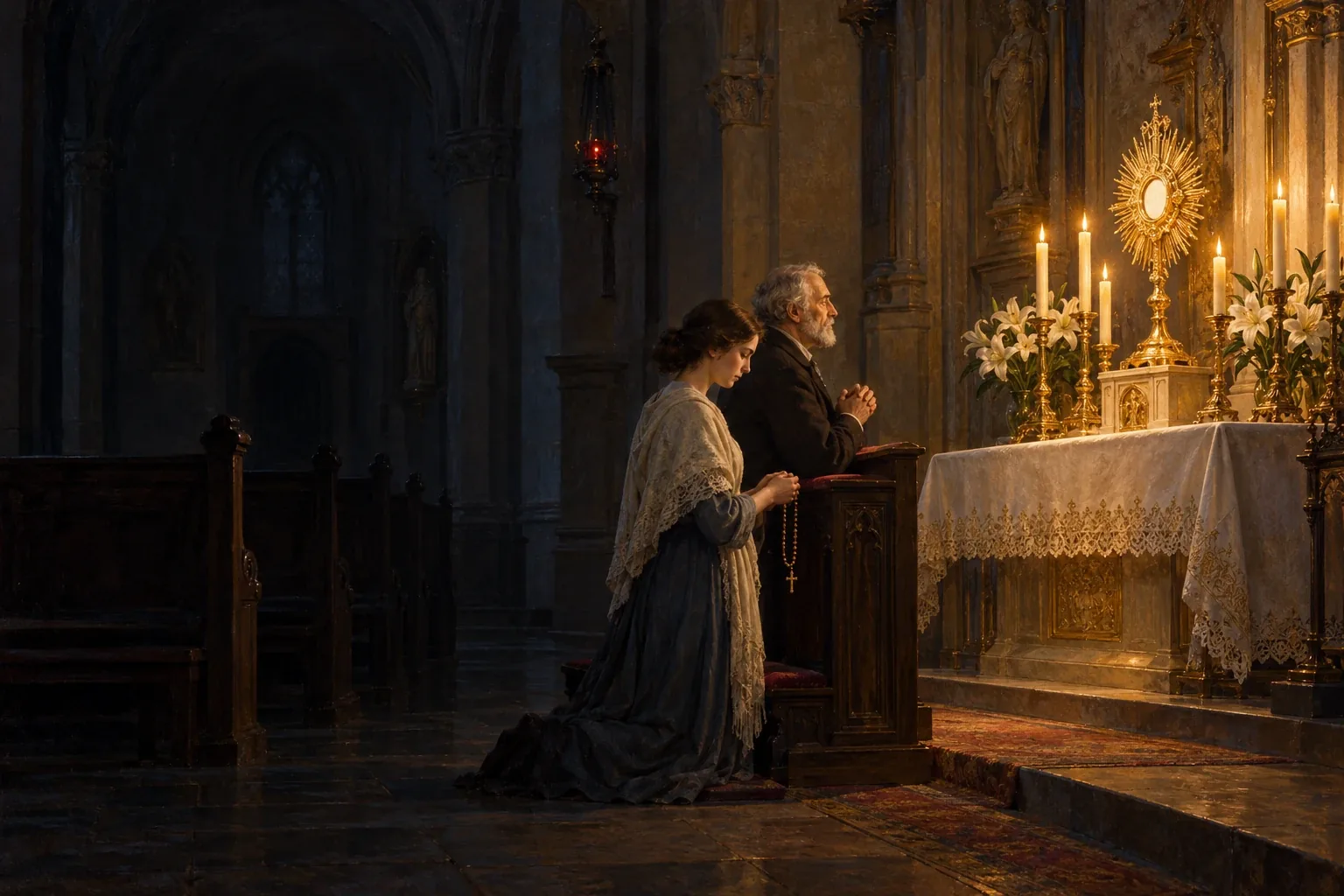
AI-generated image, directed by MZE
What an indulgence is
When a sin is forgiven, its guilt is taken away, but a “temporal punishment” — the purification still owed for sin — can remain. An indulgence is a remission before God of that temporal punishment, for sins whose guilt has already been forgiven, granted through the Church, which applies the treasury of the satisfactions of Christ and the saints (Catechism 1471–1473, 1478; Code of Canon Law, can. 992).
An indulgence is partial or plenary, as it frees from part or all of that punishment (can. 993). You can gain it for yourself or offer it for the dead, but not for other people still living on earth (can. 994; The Gift of the Indulgence, n. 7). Offering indulgences for the souls in Purgatory is one of the ways we help them (Catechism 1479).
Who can gain one
Anyone who is baptised, not excommunicated and in the state of grace — at least when the work is finished — and who has at least a general intention of gaining it, doing the work at the time and in the way laid down (can. 996; Enchiridion, Norm 17).
The conditions for a plenary indulgence
Besides doing the work itself, you need (Enchiridion, Norm 20 § 1; The Gift of the Indulgence, n. 4):
- Sacramental confession
- Holy Communion
- Prayer for the intentions of the Pope — one Our Father and one Hail Mary are enough, or any other prayer you choose (Norm 20 § 5; n. 5)
- Freedom from all attachment to sin, even venial sin
- When: the three conditions may be fulfilled several days before or after the work — the Apostolic Penitentiary speaks of about 20 days — though it is fitting that Communion and the prayer for the Pope be on the same day (Norm 20 § 3; n. 5).
- One confession, several indulgences: one confession is enough for several plenary indulgences, but each needs its own Communion and its own prayer for the Pope (Norm 20 § 2; n. 5).
- Once a day: a plenary indulgence can be gained only once a day; a partial one several times. At the point of death a plenary indulgence can be gained even if one was already gained that day (Norm 18).
- If something is missing: without full detachment from sin, or without the work or the three conditions, the indulgence is partial (Norm 20 § 4). For a partial indulgence the work done with a contrite heart is enough.
- If you cannot: a confessor may change the work or the conditions for someone who is legitimately prevented (Norm 24).
On any day of the year
The Church names four works for which a plenary indulgence can be gained on every day of the year, once a day (Enchiridion, Other grants, introduction n. 7):
Adoration
Visiting the Blessed Sacrament to adore for at least half an hour (Grant 7 § 1).
Sacred Scripture
Reading the Bible with reverence, as spiritual reading, for at least half an hour. If you cannot read, listening to it read aloud or as a recording counts too (Grant 30).
The Way of the Cross
Praying the Stations of the Cross before stations properly erected, moving from one to the next and meditating on the Passion. Those who are prevented may instead read and meditate on the Passion for a quarter of an hour (Grant 13).
The Rosary
Praying five decades without a break, with meditation on the mysteries, in a church or oratory, or together as a family, community or group. Prayed alone elsewhere, the indulgence is partial (Grant 17 § 1).
Through the year
- Good Friday — taking part devoutly in the adoration of the Cross in the liturgy (Grant 13 § 1).
- The Easter Vigil, or the anniversary of your baptism — renewing your baptismal promises (Grant 28 § 1).
- Divine Mercy Sunday (the Second Sunday of Easter) — taking part in the prayers and devotions of Divine Mercy in a church or chapel, or, before the Blessed Sacrament, praying the Our Father and the Creed with a devout prayer such as “Merciful Jesus, I trust in you!” The sick and those who cannot leave home may gain it before an image of the merciful Jesus (Apostolic Penitentiary, decree of 2002).
- The papal blessing Urbi et Orbi, such as at Christmas and Easter — received devoutly, also when followed on television or radio (Grant 4).
- 1–8 November — visiting a cemetery and praying for the dead, even only in your heart, on each of these days; and on All Souls’ Day, visiting a church and praying the Our Father and the Creed. These indulgences can be offered only for the souls in Purgatory (Grant 29 § 1). See Pray for the dead.
At the hour of death
The priest who brings the sacraments to someone in danger of death gives the apostolic blessing with a plenary indulgence. If no priest can come, the Church grants it to anyone rightly disposed who habitually prayed during life, and she herself supplies the three conditions; it is good to have a crucifix or cross at hand (Grant 12).
Little ways, every day
Four general grants bring a partial indulgence into ordinary life (Enchiridion, the four general grants):
- Raising your mind to God with humble trust in your work and troubles, adding a short prayer, even silently.
- Moved by faith, giving yourself or your goods with mercy to serve brothers and sisters in need.
- In a spirit of penance, freely giving up something lawful that you enjoy.
- Freely bearing open witness to your faith before others in daily life.
Sources
- Enchiridion Indulgentiarum, 4th edition (1999) — Apostolic Penitentiary, Latin text
- The Gift of the Indulgence (29 January 2000) — Apostolic Penitentiary
- Catechism of the Catholic Church, 1471–1479
- Code of Canon Law, canons 992–997
- Decree on the indulgences of Divine Mercy Sunday (2002) — Apostolic Penitentiary
Written by CathoNav in plain words from these documents. Special indulgences are also granted for jubilees and particular occasions; your parish priest can tell you more. Something unclear or wrong? Tell us.